She Called Me The Maid At My Own Resort My Son Laughed—until The Manager Opened The Ownership File
Chapter 1 – THE WOMAN THEY THOUGHT WAS NOTHING
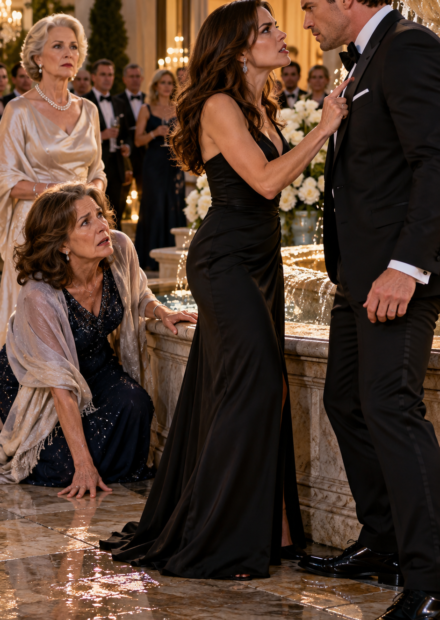
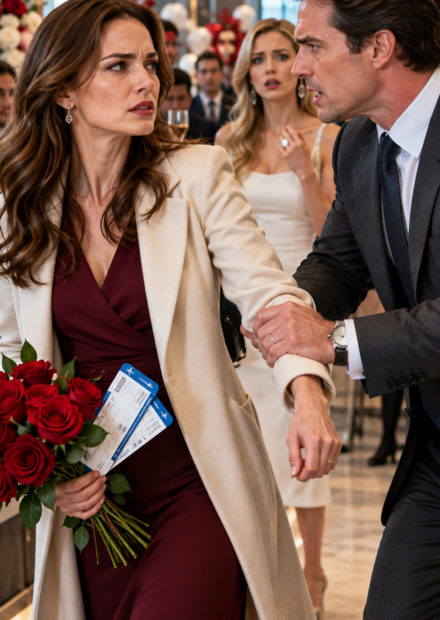
My daughter-in-law pointed at me in the lobby of a luxury Florida resort and told the manager, “Don’t listen to her. She’s basically the maid.”
My forty-eight-year-old son stood beside her.
He heard every word.
And he laughed.
It wasn’t a cruel, booming laugh. That might have been easier to understand. It was a small, embarrassed chuckle—the kind a man gives when he wants his wife to know whose side he is on.
“Just let Amber handle it, Mom,” Mark said.
I looked at my son for several seconds.
Then I looked around the lobby.
Italian marble stretched beneath our feet. Crystal chandeliers hung three stories above us, scattering warm afternoon light across cream-colored walls. Beyond the glass doors, palm trees bent toward the Atlantic, and the ocean glittered blue-white in the Florida sun.
Amber thought she was humiliating an elderly woman in a hotel lobby.
Mark thought he was keeping peace with his wife.
Neither of them knew the marble beneath their feet belonged to me.
So did the chandeliers.
So did the private beach.
And so did Serenity Shores Resort.
I was seventy-two years old, and until that moment I had spent most of my life confusing love with protection.
That mistake had finally caught up with me.
Four hours earlier, I had been sitting in the back seat of Mark’s SUV, telling myself this vacation might bring my son and me closer again.
It embarrassed me now to remember how hopeful I had been.
Mark rarely invited me anywhere anymore.
There was always a reason.
Work.
Amber had plans.
They were tired.
They were traveling with friends.
They needed “couple time.”
I understood all of those things individually. A grown man was supposed to have his own life. I had never expected Mark to remain the twelve-year-old boy who once crawled into my bed after his father died because the house suddenly felt too quiet.
But somewhere along the way, independence had turned into distance.
Our Sunday dinners became monthly dinners.
Monthly dinners became holiday phone calls.
Then even those calls became shorter.
So when Mark telephoned and said, “Mom, Amber and I are going down to Serenity Shores for a week. Why don’t you come with us?” I answered too quickly.
“I’d love to.”
There was a pause.
Then Mark said, “Great.”
I should have heard something in that pause.
Instead, I heard what I wanted to hear.
My son wanted me around again.
For the first hour of the drive, I tried to believe it.
Amber sat in the passenger seat scrolling through the resort website.
“Oh, look at this,” she said. “They have a private spa pavilion.”
Mark glanced over. “Book whatever you want.”
“And golf?”
“Already handled.”
“What about the chef’s table?”
“I’ll call when we arrive.”
I leaned forward slightly.
“I’ve heard the seafood restaurant there is excellent.”
Amber looked over her shoulder.
“Yes.”
One word.
Then she turned around again.
A few minutes later I tried once more.
“The gardens are supposed to be beautiful this time of year.”
“Mm-hmm.”
That was all.
Mark caught my eye in the rearview mirror and gave me an apologetic little smile.
I smiled back because that was what I had always done.
Smooth things over.
Make excuses.
Keep everyone comfortable.
His father, David, had died when Mark was twelve.
Cancer took him slowly enough that we had time to understand what was happening and quickly enough that none of us were ready.
On the last night David was fully conscious, I sat beside his hospital bed holding a cup of water he no longer had the strength to lift.
His hand found mine.
“Eleanor.”
“I’m here.”
“Promise me something.”
“Anything.”
His eyes moved toward the door.
Mark had fallen asleep in a chair in the hallway.
“Don’t let him feel alone.”
I bent over David’s hand and cried into it.
“I promise.”
For decades, I believed keeping that promise meant protecting Mark from every hard edge I could.
What I did not understand was that if you spend long enough cushioning every fall for a child, he may grow into a man who never learns how much other people hurt when he lets them fall.
After David died, there was almost nothing left.
Medical bills had swallowed most of our savings.
I had a mortgage.
A twelve-year-old son.
And a part-time bookkeeping job that would not cover both.
Six months later, through a combination of borrowed money, terrifying optimism, and what I now recognize as desperation, I took over a failing twelve-room bed-and-breakfast called the Magnolia House.
The roof leaked.
Three rooms had broken air conditioners.
The wallpaper looked like it had survived two wars.
I cleaned bathrooms before sunrise.
I cooked breakfast.
I washed sheets.
I answered reservation calls.
Mark did homework behind the front desk while I balanced invoices.
Some nights, after he fell asleep on the little sofa in the office, I covered him with a towel because I could not afford a proper blanket for the lobby yet.
I carried him to the car after midnight.
Then I got up at five the next morning and did it again.
The Magnolia House survived.
Then it prospered.
Five years later, I bought another small inn.
Then a third.
I hired carefully, reinvested almost everything, learned financing, construction, marketing, labor law, insurance, hospitality management, and every other subject necessity forced upon me.
By the time Mark finished college, I had a small regional company.
By the time he turned thirty-five, it was no longer small.
Mark knew I owned hotels.
What he did not know was exactly how many.
I had never lied to him. I simply stopped volunteering numbers.
Whenever he asked how business was going, I said, “Well enough.”
Whenever he asked whether I was thinking of retiring, I said, “Eventually.”
Whenever Amber made comments about how lucky I was that my “little hotel investments” had worked out, I smiled.
I wanted Mark to love me because I was his mother.
I did not want him looking at me and mentally calculating inheritance.
That was why I had never told him Serenity Shores belonged to my company.
The property had once been one of Florida’s most celebrated coastal resorts before years of bad management sent it into decline. I spent three years negotiating the acquisition and another two restoring it.
I approved the marble.
I chose the chandeliers.
I fought to preserve the original gardens.
I personally rejected six designs for the oceanfront terrace because none of them respected the architecture.
And yet, for this vacation, I booked an ordinary oceanfront suite under Mark’s name.
Before we arrived, I called Sarah Collins, the resort’s general manager.
“Treat us like any other guests,” I told her.
“Mrs. Bennett—”
“Eleanor.”
She laughed softly. “Eleanor, half the senior staff knows you.”
“Then tell them to behave as though they don’t.”
“May I ask why?”
“My son invited me on a family vacation.”
Sarah understood immediately.
“You want a vacation from being the owner.”
“Exactly.”
Looking back, I almost laugh at the innocence of that plan.
It lasted less than ten minutes.
Amber walked into the lobby wearing enormous sunglasses and carrying a handbag that probably cost more than the first car I ever owned.
She barely looked at the ceiling.
Barely noticed the flowers.
Barely acknowledged the young bellman who greeted her.
She went directly to reception.
“Mark Bennett,” she said.
Sarah was behind the desk.
Her eyes flicked toward me for half a second.
Then she smiled professionally.
“Welcome to Serenity Shores, Mr. and Mrs. Bennett. We have your oceanfront suite ready.”
Amber lowered her sunglasses.
“Suite?”
“Yes, ma’am.”
“We want the penthouse.”
Sarah checked the reservation even though she already knew exactly what it said.
“Your reservation is for our two-bedroom oceanfront suite.”
“I know what we booked. I’m telling you we want the penthouse.”
“I’m afraid the penthouse is occupied.”
Amber stared at her.
“Then move them.”
Sarah paused.
“Excuse me?”
“The people in the penthouse. Move them.”
“They are confirmed guests, ma’am.”
“So?”
Mark touched Amber’s arm.
“Maybe there’s another premium room.”
Amber pulled away.
“No. You told me this was supposed to be special.”
I felt something twist in my stomach.
I stepped closer.
“Amber, the oceanfront suite is beautiful. We don’t need—”
“Stay out of this.”
The words were sharp enough that two guests near the concierge desk turned around.
I stopped.
Amber looked back at Sarah.
“She does this all the time. Don’t listen to her.”
Sarah’s expression changed.
Amber waved one manicured hand toward me.
“She’s basically the maid.”
There are humiliations that make you angry immediately.
Others hurt so deeply that anger takes time to arrive.
For me, the worst part was not Amber.
It was Mark.
I looked at him.
He knew.
He knew about the mornings I scrubbed toilets before waking him for school.
He knew about the years I wore the same winter coat so he could have new sneakers.
He knew I had sat beside him through nightmares after his father died.
He knew exactly what the word maid was meant to do in Amber’s mouth.
Reduce me.
Make me small.
Put me beneath her.
For one foolish second, I waited for him to defend me.
Instead, he laughed.
“Just let Amber handle it, Mom.”
Something inside me became very still.
Sarah knew me well enough to recognize that stillness.
Her hand moved beneath the desk toward the private management phone.
I gave the smallest shake of my head.
Not yet.
Amber continued.
“I don’t understand why this is difficult. We’re paying a fortune to stay here.”
“You’re paying the confirmed rate for your reserved accommodation,” Sarah said.
“Then get your manager.”
“I am the general manager.”
That slowed Amber down.
Only for a second.
“Well, then get whoever owns the place.”
Mark closed his eyes.
“Amber.”
“What? If they want wealthy guests, they should learn how to treat wealthy guests.”
I almost smiled.
Sarah looked at me.
I stepped closer to the marble counter.
“Sarah.”
She straightened.
“Yes, ma’am?”
Amber frowned.
It was the first time she noticed Sarah’s tone toward me.
I rested one hand on the counter.
“Is the ownership file still in the secured drawer behind the desk?”
The lobby went quiet.
Mark looked at me.
Amber blinked.
“What?”
Sarah reached beneath the counter.
She removed a small brass key.
Then she unlocked a drawer Amber had not known existed.
From it she took a slim black folder.
She placed it on the marble between us.
Stamped across the cover in silver lettering were the words:
SERENITY SHORES RESORT
OWNERSHIP AND EXECUTIVE AUTHORITY
Mark’s face changed.
“Mom?”
Sarah opened the folder.
On the first page was the corporate ownership certificate.
Bennett Hospitality Group.
Below that was the executive authorization.
My name appeared in black ink.
ELEANOR BENNETT
FOUNDER AND MAJORITY OWNER
Amber stared at it.
Then she looked at me.
Then back at the document.
“No.”
It came out almost as a whisper.
Mark stepped closer.
“What is this?”
I looked at my son.
“It’s exactly what it says.”
“You own this place?”
“Yes.”
“The whole resort?”
“Yes.”
Amber laughed once, but there was no humor in it.
“That’s impossible.”
Sarah spoke before I could.
“Mrs. Bennett’s company acquired Serenity Shores five years ago. She personally oversaw the restoration.”
Amber’s mouth opened.
Nothing came out.
The bellman near the entrance suddenly found the luggage tags fascinating.
A woman sitting in the lobby pretended to study her phone.
Mark kept staring at me.
“Why didn’t you tell me?”
That question nearly broke my heart all over again.
Not *Mom, I’m sorry.*
Not *I shouldn’t have laughed.*
Not *How could Amber speak to you like that?*
His first question was why I had not told him I owned something valuable.
I closed the folder.
“Because I wanted one week with my son.”
His face tightened.
“What does that mean?”
“It means I wanted to know how you would treat me when you thought I was simply your mother.”
Amber folded her arms.
“This is ridiculous. If you own it, why did you book us a regular suite?”
“Because there is nothing wrong with a regular suite.”
“Then why let us embarrass ourselves?”
I stared at her.
“I didn’t.”
Her cheeks flushed.
“You could have said something.”
“I did. I said the oceanfront suite was enough.”
“That’s not what I mean.”
“I know.”
Mark lowered his voice.
“Mom, can we talk privately?”
“We will.”
Amber looked toward Sarah.
“So the penthouse—”
I actually thought I had misheard her.
Sarah’s eyebrows rose.
Amber swallowed.
“I mean, if Eleanor owns the resort, then obviously the situation is different.”
“No,” I said.
She turned toward me.
“The situation is exactly the same. The penthouse is occupied by guests who booked it before we arrived.”
“But—”
“No one is being displaced because you want their room.”
Amber’s jaw tightened.
“You’re making a point.”
“Yes.”
“What point?”
“That money and connections do not turn other human beings into furniture.”
Mark flinched.
Amber’s face hardened.
I turned to Sarah.
“Please keep the original reservation.”
“Of course.”
“And make sure the penthouse guests are not disturbed.”
“Absolutely.”
Sarah handed Mark the room keys.
He took them slowly.
For a moment none of us moved.
Then Amber picked up her handbag.
“Fine.”
She marched toward the elevators.
Mark remained beside me.
“Mom…”
I looked at him.
For the first time that day, he looked less like a successful forty-eight-year-old man and more like the boy who used to stand in the kitchen after breaking something, waiting to see whether I was angry.
Only this time I did not rescue him from the discomfort.
“I’ll meet you upstairs,” I said.
I turned back toward Sarah.
Mark hesitated.
Then followed his wife.
Sarah waited until the elevator doors closed.
“I’m sorry,” she said quietly.
I looked down at the ownership folder.
“No.”
I ran my fingers over my own name.
“I think I needed to hear it.”
“Hear what?”
I looked toward the elevators.
“What my son has learned he can allow.”
Sarah said nothing.
She didn’t need to.
Because at seventy-two years old, standing in the lobby of a resort I had built from the ruins of another company’s mistakes, I finally understood something I should have learned decades earlier.
Protecting someone from consequences does not always make them kinder.
Sometimes it only teaches them that someone else will absorb the damage.
And upstairs, my son was waiting for me to do exactly that again.
This time, I wasn’t going to.