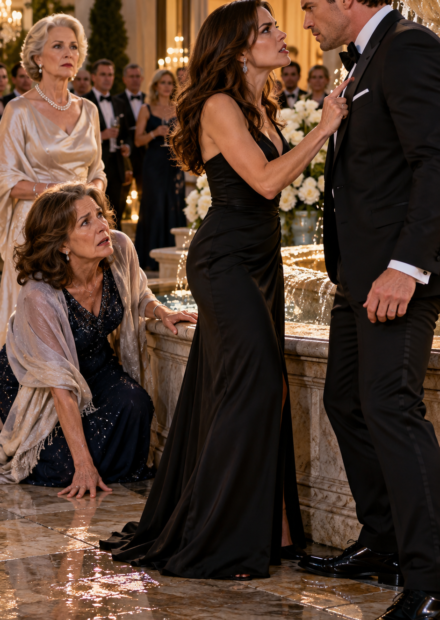
Chapter 4 – THE PROMISE THAT WAS NEVER A PROMISE
Mom sat at the kitchen table.
For the first time since this began, she looked old to me.
Not weak.
Just tired.
“There was no promise to sell Willowbrook,” she said. “But Richard has told himself there was for twenty-two years.”
“What happened?”
“Your father agreed to consider an easement.”
“That’s different.”
“I know.”
She folded her hands.
“William was sick. Medical bills were frightening. You were twelve. I didn’t know whether I could keep the farm running alone.”
I sat opposite her.
“Dad considered selling access?”
“For about two weeks.”
That surprised me.
Dad had become almost mythical in my memory.
The man who never surrendered.
But real people got scared.
Real people reconsidered.
“Richard offered enough money to pay the medical debt and create a college fund for you.”
“What changed?”
“Your father learned the road wasn’t the whole project.”
Mom looked toward the fields.
“Richard told us it was access for a small commercial development. William later discovered the plans were much larger. More traffic. More construction. More land purchases. The creek would have needed major drainage work.”
“So Dad backed out.”
“Yes.”
“Had he signed anything?”
“A letter saying he was willing to discuss terms.”
“That’s it?”
“That was it.”
Daniel confirmed it the next morning.
He found the original letter in his archives.
It said:
I am willing to continue discussions regarding a potential access easement, subject to environmental review, final legal terms, and my family’s approval.
No promise.
No contract.
No sale.
Nothing binding.
Richard had spent twenty-two years turning “willing to discuss” into a betrayal.
“He sued?” I asked.
“Threatened to,” Daniel said. “Never filed.”
“Why?”
“He had no case.”
That should have ended it.
Instead, it explained Richard.
He wasn’t simply pursuing valuable land.
Willowbrook represented the first time a dying farmer had told him no.
And men like Richard remembered no.
Emma called just after noon.
Her voice was tense.
“Dad scheduled a meeting with his board tomorrow.”
“About what?”
“Willowbrook.”
“How do you know?”
“My access hasn’t been fully disabled yet. The calendar invitation says acquisition contingency review.”
Daniel leaned closer.
“Ask whether legal counsel is attending.”
Emma checked.
“Yes.”
“Good.”
“Why good?”
Daniel smiled slightly.
“Because lawyers dislike surprises.”
We spent the afternoon organizing evidence.
I hated how calm the work felt.
The church had been explosive.
This was worse.
Dates.
Emails.
Documents.
Timelines.
Every page showed planning.
Stephanie had first asked Mom about her will nine months before the wedding.
She had brought assisted-living brochures two months before.
The proposed POA had been drafted three weeks before.
The option agreement was dated but unsigned.
The development map had been revised five times.
The newest version was from six days before our wedding.
Six days.
While I was choosing flowers and confirming music, my fiancée was reviewing a subdivision drawn over my childhood home.
At four that afternoon, Stephanie arrived alone.
I saw her through the kitchen window.
No Mercedes.
No father.
She had driven her own car.
Mom looked at me.
“Do you want me to leave?”
“No.”
Stephanie knocked.
I opened the door.
She looked different without the wedding machinery around her.
No elaborate makeup.
No perfect hair.
Jeans.
Sweater.
Red eyes.
“Can I come in?”
“No.”
She swallowed.
“Charles, please.”
I stepped onto the porch and closed the door behind me.
“You have five minutes.”
She looked toward the barn.
“I know how this looks.”
“That sentence usually comes before something that looks exactly how it is.”
“My father has been obsessed with this property for years.”
“You helped him.”
“I thought I could manage him.”
“You created a development plan.”
“He created it.”
“In your locked room.”
“I was trying to understand what he wanted.”
“You brought my mother a power of attorney.”
Stephanie looked down.
“That was wrong.”
Finally.
The first honest sentence.
“You told her it was medical paperwork.”
“I panicked.”
“For three weeks?”
“I wanted her protected.”
“By making yourself successor agent?”
She closed her eyes.
“I know.”
“No. Explain it.”
“My father said if something happened to you, Margaret would have nobody.”
“She has Daniel.”
“Dad said Daniel was too old.”
“Mom is sixty-nine. Daniel is seventy-three, not dead.”
“I know how it sounds.”
“Stop saying that.”
Her eyes filled.
“I loved you.”
I wanted not to react.
I did anyway.
Maybe she saw it.
She stepped closer.
“I did.”
“Then why didn’t you tell me about Willowbrook Estates?”
“Because I knew you’d say no before hearing the numbers.”
“That’s what no means.”
“You could have had everything.”
“I had everything.”
She looked around.
“At this?”
That one word finished whatever tenderness remained.
At this.
The farmhouse.
The barn.
My mother.
The life that had built me.
She still couldn’t see it.
“You really don’t understand.”
“Charles—”
“You think value is the number someone will pay.”
“That’s not fair.”
“Isn’t it?”
She began crying.
Maybe the tears were real.
I think they were.
People can love you and still decide their ambition matters more.
That was harder to accept than believing she had never loved me.
“What did your father promise you?” I asked.
She looked startled.
“What?”
“You didn’t do this for nothing.”
Silence.
“Equity?”
Her eyes answered.
“How much?”
“Charles…”
“How much?”
“Ten percent of the project.”
There it was.
Based on Richard’s projection, potentially millions.
“And the marriage?”
“Was real.”
“Was the farm part of why you chose me?”
“No.”
Too fast.
I waited.
She looked away.
“When we first met? No.”
“And later?”
“My father found out who your mother was.”
“When?”
“About four months into our relationship.”
“And then?”
“He started asking questions.”
“Did he encourage you to stay with me?”
She cried harder.
That was answer enough.
I felt something collapse inside me.
Not dramatically.
Quietly.
Like an old building finally giving way after the supports had already rotted.
Stephanie reached for my hand.
I stepped back.
“Don’t.”
“Please.”
“You stood in a church yesterday and called my mother a peasant.”
“I was angry.”
“At what?”
She said nothing.
“At her refusing to sign?”
Her face changed.
There.
That was it.
I almost couldn’t believe it.
“You weren’t angry about the dress.”
“Charles—”
“You knew she hadn’t signed.”
“Dad called me that morning.”
“So when Mom came to hug you, you were already furious with her.”
Stephanie covered her face.
“Oh my God.”
The cruelty at the altar hadn’t been random.
It had been resentment.
Mom had ruined the plan before the wedding even began.
And Stephanie had punished her for it.
I opened the door.
“We’re done.”
“Charles.”
“Forever.”
She lowered her hands.
“My father will still pursue Willowbrook.”
“I know.”
“You don’t understand him.”
“No.”
I looked toward the kitchen where my mother stood behind the curtain.
“But I’m starting to.”
Stephanie’s expression hardened.
The tears disappeared faster than I expected.
“If Whitmore Development makes a legitimate offer, Daniel has to consider it.”
“He has to consider what’s best for the trust.”
“Exactly.”
She stepped backward.
“You think this is over because you canceled a wedding.”
I said nothing.
She continued.
“This land is surrounded by development. Taxes will rise. Farming gets harder every year. Your mother is getting older. Eventually reality wins.”
I almost smiled.
“That’s your mistake.”
“What?”
“You think this is about stopping change.”
“It is.”
“No. It’s about deciding who gets to choose it.”
She left.
The next morning, Daniel and I drove to Whitmore Development headquarters.
Richard’s board meeting began at nine.
We arrived at nine-ten.
We didn’t storm in.
We didn’t shout.
Daniel had arranged something far more effective.
A formal notice.
The receptionist tried to stop us.
Then Richard’s general counsel appeared.
His name was Jonathan Hale.
Daniel handed him the packet.
Jonathan read the first page.
Then the second.
His face changed.
“What is this?”
“Notice from the trustee of the Hartwell Family Land Trust,” Daniel said.
“Regarding?”
“Unauthorized efforts to obtain control or development rights over trust property.”
Jonathan looked toward me.
“Mr. Hartwell, is this connected to yesterday’s canceled wedding?”
“No.”
I held his gaze.
“The canceled wedding is connected to this.”
That distinction mattered.
We were escorted into a conference room.
Richard was at the head of a long table.
Stephanie sat three seats away.
Emma wasn’t there.
Six board members turned toward us.
Richard stood.
“This is a private meeting.”
Daniel smiled.
“Then you’ll appreciate our brevity.”
Jonathan whispered something to Richard.
I watched his expression change.
Daniel placed copies in front of everyone.
The proposed POA.
The option agreement.
The development plans.
The emails.
Richard didn’t touch them.
One board member did.
A woman named Linda Carr.
She read silently.
Then looked at Richard.
“Did the property owner authorize this project?”
Richard said, “These were preliminary planning exercises.”
“Did she authorize them?”
“No authorization was required for internal feasibility.”
Daniel said, “Correct.”
Richard looked relieved.
Daniel continued.
“The issue is not the map.”
He placed Stephanie’s POA on the table.
“The issue is the attempt to secure authority from a sixty-nine-year-old property beneficiary by describing a broad financial power of attorney as health planning.”
Stephanie stood.
“That isn’t what happened.”
I looked at her.
“Sit down.”
Maybe it was my tone.
Maybe it was the room.
She did.
Richard said, “My daughter is not an employee authorized to act for this company.”
Linda turned to him.
“Then why is she receiving ten percent equity?”
Silence.
I hadn’t told Daniel about that until the night before.
He had insisted we document it.
Richard looked at Stephanie.
For the first time, she seemed to understand what her father was doing.
Separating himself.
Sacrificing her.
“That was a family discussion,” Richard said.
Stephanie stared at him.
“Dad.”
He didn’t look at her.
Jonathan asked, “Is there a signed option?”
“No,” Daniel said.
“A signed POA?”
“No.”
“A signed purchase agreement?”
“No.”
Richard leaned back.
“Then there is no transaction.”
Daniel nodded.
“Correct.”
That seemed to surprise everyone.
I finally understood Daniel’s strategy.
We weren’t accusing them of stealing the farm.
We didn’t need to exaggerate.
The truth was enough.
I spoke.
“My mother signed nothing. She authorized nothing. Willowbrook is not for sale. Any future communication regarding the property goes through Daniel Mercer’s office.”
Richard smiled thinly.
“You came here to tell us something you could have said by email?”
“No.”
I slid one final page across the table.
“I came here because I’m an engineer.”
He frowned.
“So?”
“I know how to read development plans.”
I placed his proposed map beside a county drainage map.
“Your forty-eight-lot concept depends on southern access.”
Nobody spoke.
“The same access my father refused twenty-two years ago.”
Richard’s jaw tightened.
I continued.
“You also designed stormwater drainage through the western basin.”
Linda picked up the map.
Richard said, “This isn’t relevant.”
“It is if you’re planning a subdivision on land you don’t control.”
I pointed toward a narrow strip along Willowbrook’s southern boundary.
“My father protected that corridor separately.”
Daniel smiled.
The board members looked at him.
He explained.
“William Hartwell placed a conservation restriction on the southern creek corridor twenty-two years ago.”
Richard froze.
That was what Daniel had discovered after reviewing the oldest trust records.
The restriction had been recorded with the county.
Permanent.
No development road.
No commercial access.
No high-density crossing through the creek basin.
Richard had apparently known about the old restriction but believed it could eventually be challenged or rerouted if the family cooperated.
Without us, his cleanest route disappeared.
I looked at him.
“You weren’t just trying to buy Willowbrook.”
His face had gone gray.
“You were trying to use my marriage to solve the problem my father left you twenty-two years ago.”
Nobody at that table said a word.
Then Stephanie whispered:
“Dad?”
Richard didn’t answer.
She looked at the development map.
Then at him.
“You told me the restriction expired.”
Still nothing.
“You said once Margaret signed, we controlled the access.”
Richard’s eyes closed.
Too late.
His daughter had just said it in front of his board.
And his lawyer.
Jonathan Hale slowly put down his pen.
The silence that followed was the loudest sound in the room.
—