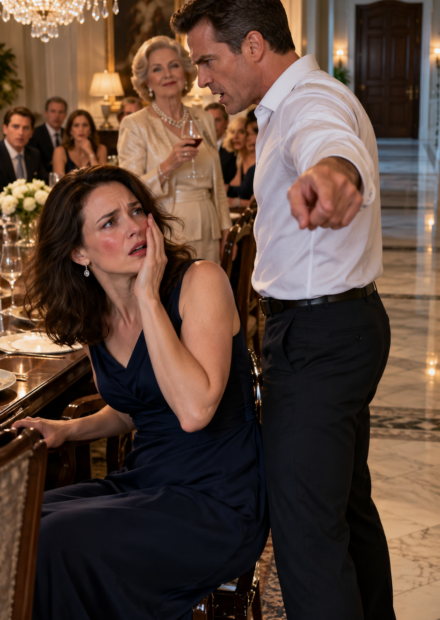
THERE WAS NO ROOM FOR ME IN MY OWN BEACH HOUSE. THEN I LEARNED WHAT MY SON HAD SIGNED.
Chapter 5 – WHAT WAS ACTUALLY OURS
Robert did not ask for the cottage back.
That was why I finished the letter.
He did not ask me to restore the old will.
He did not mention the trust.
He did not say Henry wanted him to have the property.
He did not accuse Megan.
He did not defend the agreement.
Instead, he wrote about a memory.
He was nine years old.
Henry had taken him fishing from the rocks below the cottage.
Robert lost his footing and dropped Henry’s favorite rod into the water.
He had cried because he thought his father would be furious.
Henry had simply stared at the water and said, “Well, I suppose the ocean owns that one now.”
Robert remembered asking why he wasn’t angry.
Henry had answered:
“People matter more than things. But that doesn’t mean you get to be careless with other people’s things.”
I remembered that fishing rod.
I remembered Henry telling me the story.
I had forgotten the sentence.
Robert had not.
His letter continued.
*I think I spent years telling myself the first half and forgetting the second.*
I had to stop reading.
For years, I had told myself exactly the same thing.
People matter more than things.
So I had let people be careless.
With my time.
My home.
My privacy.
My grief.
My generosity.
I had believed objecting would mean I cared more about property than family.
But boundaries were not proof that property mattered more than people.
Sometimes boundaries were how people learned to treat one another properly.
Robert wrote that he and Megan had canceled every conversation related to future renovation.
They had contacted the contractor and made clear they had no authority over the property.
They had removed the cottage from their retirement assumptions.
They were also seeing a marriage counselor.
Then came the line I read three times.
*I don’t want you to change the will back.*
I cried.
Not because I had wanted him to say it.
Because I had not realized how badly I needed to know he could.
He continued:
*If you sell the cottage tomorrow and spend every dollar traveling around the world, I will survive. If you leave it to Emma and Luke, I will survive. If you give it to Henry’s scholarship, I will survive. I should have understood that before you had to teach it to me at seventy years old.*
I laughed through my tears.
Then I reached the final paragraph.
*I would like to visit again someday. Not because Dad gave me a key. Not because I grew up there. Not because I might inherit anything. I would like to visit because my mother lives there sometimes, and I miss her. If you invite me, I’ll come.*
I folded the letter.
I did not call him immediately.
Old Evelyn would have.
Old Evelyn would have rushed to remove his discomfort.
She would have called before finishing her tears.
She would have said everything was fine.
Nothing was fine.
But something was healing.
Those were different things too.
Three days later, I called him.
“Hello, Mom.”
His voice was cautious.
“I got your letter.”
“Okay.”
“The window works now.”
He laughed unexpectedly.
“Luke told me.”
“He’s better with tools than you ever were.”
“Definitely.”
We were quiet.
Then I said, “Would you and Megan like to come for dinner next Saturday?”
Another silence.
This one felt different.
“Yes.”
“Just dinner.”
“Yes.”
“No overnight guests.”
He laughed again, though I could hear him crying.
“Understood.”
“And Robert?”
“Yeah?”
“Bring dessert.”
“I can do that.”
He arrived at six o’clock the following Saturday.
He knocked.
That mattered.
For thirty years, my son had walked into that cottage without knocking.
That evening, he stood outside and waited.
I opened the door.
“Hi.”
“Hi, Mom.”
Megan stood behind him holding a pie.
“We brought dessert.”
“I can see that.”
She gave me a nervous smile.
I stepped aside.
“Come in.”
Those two words felt completely different when they were mine to say.
Dinner was awkward at first.
Of course it was.
Real reconciliation rarely looked like movies.
Nobody delivered a perfect speech.
Nobody cried into anyone’s arms for ten minutes.
We discussed Emma’s college applications.
Luke’s driving lessons.
A neighbor’s ridiculous new fence.
Megan complimented the fish.
Robert said it needed salt.
I told him he could cook next time.
Eventually, we laughed.
After dinner, Megan helped me wash dishes.
She glanced toward the sunroom.
“I owe that room an apology.”
I smiled.
“It has survived worse.”
“I really did hate it.”
“I know.”
She looked embarrassed.
“I don’t anymore.”
“You’re allowed to hate it.”
She blinked.
“I am?”
“Yes. You just aren’t allowed to demolish it.”
She laughed so suddenly she almost dropped a plate.
That was the first moment I believed we might actually be all right.
Not the same.
Never the same.
But perhaps better.
Later, Robert and I sat in the sunroom.
Henry’s chair remained beside the western window.
Robert looked at it.
“I still think about Dad here.”
“So do I.”
“I really believed he wanted me to have the cottage.”
“He did.”
Robert looked at me.
I continued.
“At the time we made that plan.”
His eyes lowered.
“That’s not the same as him giving it to me.”
“No.”
“I know that now.”
Outside, waves moved silver beneath the moon.
He rubbed his hands together.
“What are you going to do with it?”
“The cottage?”
“Yes.”
“I don’t know.”
He nodded.
And for the first time, he did not ask another question.
No value.
No taxes.
No roof.
No inheritance.
Just:
“I hope you enjoy it.”
I reached over and took his hand.
“Thank you.”
The estate plan remained unchanged.
That surprised some people.
Carol eventually asked Megan, who eventually told me, whether I was still planning to sell the cottage after my death.
I told her I was planning to be alive for quite a while, so everyone would simply have to tolerate the uncertainty.
She laughed.
So did I.
The scholarship paperwork moved forward.
I named it after Henry.
Not because I wanted to punish Robert by giving money away.
Because Henry had been a vocational-school graduate who built a good life with his hands, and I realized there were young people who needed opportunity more than my adult son needed another piece of real estate.
Emma chose a university the following spring.
Luke became the unofficial repairman of the cottage.
He always called before coming.
Always.
Sometimes ridiculously.
“Grandma, can I come over? I’m literally standing at the end of your driveway.”
“Yes, Luke.”
“Okay, good.”
Robert never used the old key again.
I kept it.
For a long time, it sat in the top drawer of my dresser.
Then one afternoon, I found Henry’s old wooden key rack in a box.
It had five hooks.
HOME.
GARAGE.
SHED.
BOAT.
COTTAGE.
The boat had been sold years earlier.
The shed belonged to a house we no longer owned.
But the cottage hook remained.
I hung Robert’s old key there.
Not as a weapon.
Not as a reminder of what I had taken away.
As a reminder of what the key had always represented.
Permission.
Not ownership.
Trust.
Not entitlement.
One year after the weekend that changed everything, I invited the family back to the cottage.
Not twenty-one people.
Nine.
Robert asked twice whether I was sure.
Megan sent me the guest list.
Emma joked that she was submitting an application for beach access.
Luke asked whether his girlfriend could come.
I said yes.
On Saturday morning, I woke to voices downstairs.
For half a second, panic moved through me.
Then I remembered.
I had invited them.
I put on my robe and went downstairs.
Robert was making coffee.
He looked up.
“Morning.”
“Morning.”
He reached toward the cupboard.
Then stopped.
Henry’s navy mug sat inside.
Robert looked at me.
“Can I?”
Such a tiny question.
A year earlier, I might have thought it ridiculous.
Now I understood everything contained inside it.
Can I?
Do I have permission?
Do you still get to decide?
Do I remember whose home this is?
I smiled.
“Yes.”
He took down the mug carefully.
“You sure?”
“Yes.”
He poured coffee.
Megan came into the kitchen carrying groceries.
“Where should I put these?”
“Anywhere except on my wedding photograph.”
She stared at me.
Then burst out laughing.
Robert nearly spilled his coffee.
Even I laughed.
The house filled with noise that day.
Children ran through the hallway.
Wet towels appeared despite repeated warnings.
Someone tracked sand into the kitchen.
Luke burned hamburgers.
Emma played music too loudly.
Megan’s pie collapsed in the heat.
It was messy.
Loud.
Imperfect.
Family.
But it felt different.
Because everyone knew they were there by invitation.
And I knew I had the right to say yes without losing my right to say no.
Near sunset, I slipped away to the sunroom.
Henry’s room.
My room.
The ugly little room that had nearly become the symbol of everything my family had stopped seeing.
Robert found me there.
He knocked lightly against the open doorframe.
“Can I come in?”
I looked at him.
“You’re already halfway in.”
He smiled.
“Old habits.”
“Come sit.”
He lowered himself into Henry’s chair.
For a while, neither of us spoke.
Then he said, “I’m glad you came home early that weekend.”
I raised an eyebrow.
“That makes one of us.”
“No. Really.”
“Why?”
He looked toward the water.
“Because I don’t know how far we would have gone.”
That was the closest either of us had come to discussing the question that sometimes kept me awake.
What if I had not come home?
What if I had arrived the next afternoon, after everyone left?
What if the towels had been removed?
What if Henry’s mug had been washed and returned?
What if the speaker had been moved?
What if I never knew twenty-one people had occupied my home without my permission?
Would the next gathering have been bigger?
Would Megan eventually have arranged work on the cottage?
Would Robert have kept building his financial future around my death?
Would I have died believing I was leaving him a gift, never understanding that he had begun spending it emotionally years before it became his?
I would never know.
“I don’t think you were trying to hurt me,” I said.
“I wasn’t.”
“I know.”
“That doesn’t make what I did okay.”
“No.”
He nodded.
That was another change.
A year earlier, every acknowledgment had been followed by a defense.
Now some sentences were allowed to end.
We watched the ocean.
After a while, he said, “Do you remember when Dad built this room?”
“Very clearly.”
“He made me help.”
“You complained constantly.”
“I was twenty-five.”
“You complained like you were twelve.”
He laughed.
“He told me one day this would all be mine.”
I turned toward him.
Robert smiled sadly.
“I know. He was talking like a father, not signing a deed.”
“Yes.”
“I wish I had understood the difference.”
“You do now.”
Outside, Emma called for him.
He stood.
At the doorway, he turned back.
“Mom?”
“Yes?”
“Whatever you eventually decide about this place… don’t decide based on me.”
I looked at my son.
That sentence was worth more to me than any promise.
“All right.”
“I mean it.”
“I know.”
He left.
I remained in the sunroom.
The house behind me was noisy.
Alive.
Mine.
For now.
That was something I had learned late in life.
For now matters.
We spend so much time imagining what will belong to whom someday that we can forget who is living, loving, grieving, choosing, and breathing today.
Henry had built that cottage with me.
Robert had grown up in it.
Megan had spent more than two decades making memories there.
Emma and Luke had learned the ocean there.
All of those things were true.
None of them were deeds.
None of them were permission.
None of them erased me.
Months later, Daniel asked whether I wanted to reconsider the estate plan now that things with Robert had improved.
We sat in his office.
“You can change it anytime,” he reminded me.
“I know.”
“Do you want to?”
I thought about it.
Then I said no.
Not because I was still angry.
That was important.
I no longer needed the will to punish anyone.
The new plan simply made more sense to me.
The grandchildren would have education funds.
Henry’s scholarship would help young people build lives of their own.
Robert would receive a meaningful share.
And the cottage?
The cottage would remain mine until I decided otherwise.
Perhaps I would sell it myself one day.
Perhaps I would keep it until my death.
Perhaps I would change my mind again.
Ownership included the right not to know yet.
For the first time in years, uncertainty felt like freedom.
Before I left Daniel’s office, he smiled.
“You seem different.”
“I am.”
“How?”
I thought about that.
“I stopped confusing being generous with disappearing.”
That autumn, I spent more time at the cottage than I had in years.
Sometimes alone.
Sometimes with friends.
Sometimes with Emma and Luke.
Sometimes with Robert and Megan.
But every visit began the same way.
A call.
A question.
An invitation.
One rainy evening, almost exactly thirteen months after the twenty-one-guest weekend, I sat in the sunroom with Henry’s navy mug between my hands.
I had finally started using it.
For years after his death, I had treated the mug as though preserving it untouched could somehow preserve him.
But Henry had never believed in keeping useful things behind glass.
It still held coffee.
So I used it.
Rain tapped against the western windows.
The floorboard near my chair squeaked.
The old frame leaked two drops before stopping.
The room was imperfect.
So was my family.
So was I.
My phone buzzed.
A message from Robert.
*Thinking about coming down next Saturday. Are you free, and would you like company?*
I smiled.
Not:
*We’re coming.*
Not:
*Is anyone using the place?*
Not:
*Can I get the lockbox code?*
Would you like company?
I typed back:
*Yes. Come for lunch. Bring Megan.*
A moment later:
*Thank you. Want us to bring anything?*
I looked around the sunroom.
At Henry’s chair.
At the windows he had installed badly.
At the walls Megan once planned to tear down.
Then I wrote:
*Just yourselves.*
I put the phone down.
Outside, the ocean was nearly invisible in the rain.
I thought about that afternoon when I had stood in my own kitchen and heard Megan say there was no room for me.
At the time, I believed the deepest insult was that they had filled every bed.
It wasn’t.
The real problem was that, long before I arrived, they had made room for everyone except the person who still owned the house.
Worse, I had helped teach them how.
Every time I swallowed my objection.
Every time I said yes because saying no might disappoint someone.
Every time I treated my own discomfort as the cheapest price in the room.
Every time I allowed gratitude to become expectation.
I had taught them that my boundaries were flexible.
That did not excuse what Robert and Megan did.
But understanding my part helped me make sure it never happened again.
People sometimes imagine boundaries as walls.
Mine became a door.
A door I could open.
A door I could close.
A door people could knock on.
That was all I had wanted.
Not obedience.
Not punishment.
Not revenge.
A knock.
A question.
The dignity of being remembered before someone made plans with what was mine.
I lifted Henry’s mug and looked toward the dark ocean.
“I finally learned,” I whispered.
I could almost hear him asking what had taken me so long.
I smiled.
Then I turned off the lamp and walked through the cottage, checking windows and doors before bed.
When I reached the kitchen, I noticed Robert’s old key hanging on Henry’s wooden rack.
I touched it once.
I had never given it back.
Maybe someday I would.
Maybe I wouldn’t.
It no longer mattered as much as it once had.
Because the lesson had never really been about a key.
It had never even been about a house.
It was about the difference between love and access.
Between inheritance and ownership.
Between generosity and surrender.
Between believing you have a place in someone’s life and believing that gives you possession of everything they have.
My son had nearly learned that difference too late.
So had I.
But not quite.
I switched off the kitchen light.
The cottage went dark around me.
And for the first time since Henry died, being alone there did not make me feel abandoned.
It made me feel present.
The house was quiet.
The sunroom was still standing.
My family was still my family.
My son was still my son.
And the future belonged to none of us yet.
That was exactly as it should be.