THERE WAS NO ROOM FOR ME IN MY OWN BEACH HOUSE. THEN I LEARNED WHAT MY SON HAD SIGNED.
Chapter 2 – FAMILY IS INVITED
Daniel did not ask me to explain everything while twenty-one people listened.
That was one reason Henry had trusted him.
He asked simple questions.
“Is Robert living at the property?”
“No.”
“Is this his primary residence?”
“No.”
“Did you authorize this gathering?”
“No.”
“Did you invite the guests?”
“No.”
“Did you give Robert permission to use the cottage this weekend?”
“No.”
“How did he enter?”
“Using the lockbox code I gave him for emergencies and approved visits.”
Daniel paused.
“All right.”
I heard typing.
“Evelyn, listen carefully. Make your wishes clear. Do not touch anyone’s belongings. Do not physically remove anyone. Give them a reasonable opportunity to leave. Most of these people may genuinely believe they were invited by someone with authority.”
“I think they do.”
“If anyone refuses after permission has been clearly revoked, call local authorities and let them handle it.”
“All right.”
“And Evelyn?”
“Yes?”
“Stay calm.”
“I am calm.”
“I know.”
That was the strange part.
I was.
For years, I had imagined boundaries as acts of anger.
That afternoon, I discovered the strongest boundary I had ever set came from a place almost beyond anger.
I ended the call.
The kitchen had become quiet.
Even the children seemed to sense something had changed.
Robert stared at me.
“You called your lawyer?”
“Yes.”
“Over this?”
I looked around the room.
“No. Not over this.”
He frowned.
“This simply made me stop postponing something I had already decided.”
Megan’s face changed.
“What does that mean?”
I ignored her for the moment.
I walked into the living room.
“Could everyone come in here, please?”
People appeared from hallways and bedrooms.
Faces I recognized.
Faces I didn’t.
Megan’s parents, Frank and Carol.
Her sister Amy and Amy’s husband.
Claire.
The Harrisons.
Several teenagers.
Children.
The young man who had used Henry’s mug stood near the doorway looking deeply uncomfortable.
I suddenly felt sorry for most of them.
They had not broken into my house.
They had accepted an invitation.
The problem was that the invitation had been issued by people who had no right to issue it.
I stood beside Henry’s photograph.
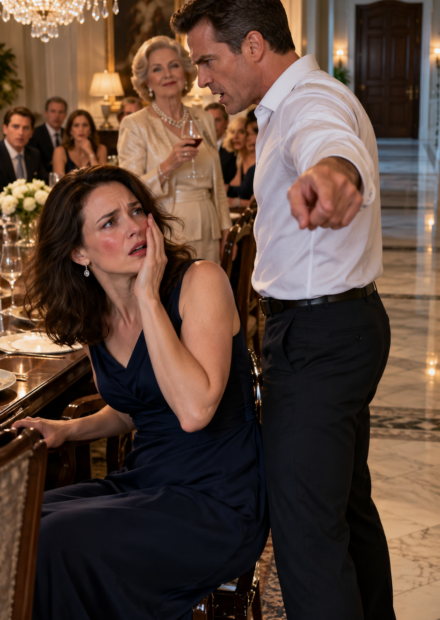
“This gathering was not authorized by the owner of this house.”
Nobody spoke.
“Most of you probably believed Robert and Megan had permission. I’m not accusing any of you of deliberately doing anything wrong. But this is my home, and I did not approve this weekend. So I’m asking everyone to collect their belongings and leave.”
Megan’s sister stared at her.
“You said Evelyn knew.”
Megan’s face flushed.
“I said it was fine.”
“That’s not the same thing.”
Carol looked horrified.
“Evelyn, I am so sorry.”
I believed her.
Frank looked from me to Robert.
“Robert told us this place was staying in the family anyway.”
That sentence landed heavily.
Robert closed his eyes.
I looked at Frank.
“It may stay in the family.”
Then I looked at my son.
“But not the way Robert expects.”
Megan went completely still.
“What did you do?”
Not Are you all right?
Not Did we hurt you?
Not Can we fix this?
What did you do?
I think that was the moment my last doubt disappeared.
“You remember three weeks ago,” I said, “when we had dinner here?”
Neither of them answered.
“I was outside the kitchen window when you were discussing the sunroom.”
Megan’s face drained.
I continued.
“You said, ‘When it’s ours, the first thing going is that ugly little sunroom.’”
Frank looked sharply at his daughter.
“Megan.”
“It was just conversation.”
“No,” I said. “It was useful information.”
Robert stepped toward me.
“Mom, what did you change?”
“My estate plan.”
He stared.
“What?”
“The cottage no longer passes automatically to you.”
For a second, I saw my son as a little boy again.
Not because he looked innocent.
Because he looked lost.
“You changed the will?”
“Yes.”
“Without telling me?”
I almost smiled.
“Whose estate is it, Robert?”
His mouth opened.
Nothing came out.
I explained only what was necessary.
After my death, unless I made another decision later, the cottage would be sold.
My grandchildren would have education trusts.
A scholarship would be created in Henry’s name.
Robert would receive his family share through a trust.
Megan stared at me as though I had announced I had burned the house down.
“You can’t be serious.”
“I am.”
“You’re punishing your grandchildren.”
“No. I am protecting something for them directly.”
Robert’s voice shook.
“Dad wanted me to have this place.”
“Your father wanted you to have a home you respected.”
“You don’t know what Dad would think about this.”
That hurt.
But grief had taught me that the dead should not be recruited into arguments they could no longer answer.
So I said only, “Neither do you.”
People began packing.
The mood shifted from confrontation to embarrassment.
I helped a little boy find one of his sneakers under the sofa.
I gave Amy garbage bags for wet swimsuits.
When Claire apologized, I told her she had nothing to apologize for.
The young man from the kitchen approached me holding Henry’s mug.
“I washed it.”
“Thank you.”
“I really didn’t know.”
“I know.”
By eight o’clock, most of the cars were gone.
Frank and Carol were among the last.
Carol hugged me.
“We truly thought you had approved it.”
“I know.”
Frank looked embarrassed.
“I shouldn’t have assumed anything.”
“None of us should.”
He glanced toward Robert.
“He told me he’d eventually inherit the cottage. I suppose I started thinking of it that way too.”
That was exactly how entitlement spread.
Quietly.
One assumption at a time.
By eight-thirty, only Robert, Megan, and my two grandchildren remained.
Emma was seventeen.
Luke was fifteen.
They stood together near the stairs, looking as though they had somehow caused everything.
I went to them.
“This is not your fault.”
Emma’s eyes filled.
“Are we still allowed to come here?”
My heart broke.
“Of course you are.”
Megan shifted behind them.
I finished my sentence.
“When you’re invited.”
Emma nodded.
She understood the difference immediately.
Interesting how children sometimes understood boundaries faster than adults.
Robert waited until they had gone outside before speaking.
“Did you really change everything because you thought I wanted your house?”
“No.”
“Then why?”
“Because you stopped noticing it was still mine.”
His phone buzzed.
He looked at the screen.
Daniel’s notice.
I knew because I had received a copy.
Robert read it twice.
“You’re taking my key?”
“Yes.”
“Dad gave me that key.”
“Henry gave you a family key to your parents’ house.”
I held out my hand.
“The house still exists. The permission changed.”
Robert’s face crumpled.
And then my fifty-one-year-old son began to cry.
That almost destroyed me.
I had comforted him through scraped knees, school failures, heartbreak, fear, and his father’s death.
Every instinct I possessed told me to end his pain.
Tell him I didn’t mean it.
Give him the key.
Promise to change the will back.
Instead, I stepped forward and put my arms around him.
He leaned against me.
“I love you,” I whispered.
He cried harder.
“But I still need the key.”
Slowly, he reached into his pocket.
He placed it in my palm.
That was the hardest victory of my life.
Because it did not feel like victory.
After they left, silence returned to the cottage.
I washed Henry’s mug.
I moved the luggage marks from the sea chest.
I folded the quilt.
I put our wedding photograph back where it belonged.
Then I sat in the sunroom.
The ugly little sunroom.
Henry had built it twenty-seven years earlier.
The windows weren’t perfectly square.
One floorboard squeaked near the corner.
When it rained hard, the western frame sometimes leaked.
It was also where Henry had read the newspaper every Sunday.
Where Robert had done summer homework.
Where I had held my first grandchild.
Where Henry had spent his final summer watching the ocean because walking to the beach had become too difficult.
I sat there until after midnight.
At 12:42 a.m., my phone buzzed.
Megan.
I almost ignored it.
Then I read the message.
*You made your point. But Robert was not the one making plans for the house.*
I frowned.
Another message appeared.
*If you really want to know why I thought it was basically ours, ask your son what he signed in October.*
I sat upright.
October had been eleven months earlier.
My hands suddenly felt cold.
I typed:
*What did he sign?*
The three dots appeared.
Then disappeared.
Appeared again.
Finally:
*Ask him.*
I called Robert.
He didn’t answer.
I called again.
Voicemail.
The third time, he declined the call.
I stared at the screen.
That frightened me more than if he had answered and shouted.
I sent one message.
*Robert. What did you sign in October?*
No answer.
I sat alone in the room Megan wanted to tear down, listening to the waves beyond the glass.
Twenty-one uninvited guests had seemed like the problem.
Now I understood they were only evidence of it.
And somewhere between October and that night, my son had put his signature on something involving a house that did not belong to him.
—