Chapter 2 – SEVEN YEARS OF EMPTY CHAIRS
Tyler stood so quickly that the coffee table shook.
“What is that supposed to mean?”
“It means you’re not moving into my house.”
Natalie pressed a hand protectively against her belly.
“We drove all this way.”
“I didn’t ask you to.”
“We thought you’d be happy.”
“I am happy.”
Tyler laughed bitterly.
“Clearly.”
“I didn’t say I was happy you’re struggling. I’m happy with my life.”
That stopped him.
Maybe because he had never imagined those words coming from me.
For years, I hadn’t imagined them either.
After Tyler’s father died, Tyler became the center of everything.
David had been forty-six.
A heart attack.
No warning.
One minute we were arguing about whether he needed to fix the dripping faucet before dinner.
The next morning, I was choosing a coffin.
Tyler was nineteen.
He came home from college for the funeral and spent the next week sitting at our kitchen table in silence.
One night, I found him crying.
I held him.
“I’m not leaving too,” I promised.
I meant it.
Maybe that was part of my mistake.
I confused love with permanent availability.
For years afterward, whenever Tyler needed something, I found a way.
Tuition.
Rent.
A used car.
The security deposit on his first apartment.
When he met Natalie, I tried to welcome her.
She was polished where I was practical.
She came from a family that used words like “networking” at dinner.
At our first Christmas together, she brought a bottle of wine that cost more than my grocery budget for the week.
I liked her.
At first.
Then came the little corrections.
“Tyler doesn’t really eat that anymore.”
“Tyler prefers quieter holidays.”
“We already made plans with my parents.”
“Maybe next month.”
Never cruel enough to confront.
Always clear enough to understand.
Tyler participated in every one of them.
That was the part I had spent too many years avoiding.
It was easy to blame Natalie.
Harder to admit my son had allowed it.
The real break came seven years earlier.
My bakery was still small then.
Sweet Morning Bakery.
One storefront.
Six employees.
More debt than profit.
But we were growing.
I had asked Tyler and Natalie to come for Thanksgiving.
They agreed.
I prepared for three days.
At noon Thanksgiving morning, Tyler texted.
Can’t make it. Something came up.
That was all.
I called.
No answer.
That evening, I saw photographs online.
Tyler and Natalie at her parents’ house.
Champagne.
Matching napkins.
A giant turkey.
Smiling faces.
Something came up.
I didn’t confront him.
I sent:
Hope you had a lovely day. Love you.
He didn’t reply.
Christmas was the same.
Then my birthday.
Then Mother’s Day.
Eventually, I stopped pretending there wasn’t a pattern.
When I finally asked him what was happening, Tyler said, “Mom, you put too much pressure on everything.”
“What pressure?”
“Every holiday becomes emotional.”
“Because I ask to see my son?”
“See? That’s what I mean.”
I remembered standing in my bakery office with flour on my apron, listening to him make my love sound like a burden.
“Tyler, are you asking me to stop calling?”
Silence.
Then:
“I think some distance would be healthy.”
Those were the last words he said to me for almost seven years.
Distance.
At first, I fought it.
I called every Sunday.
Then every other Sunday.
Then once a month.
I sent birthday cards.
Christmas cards.
Photographs.
I told him when the bakery started catering weddings.
I told him when we opened our second location.
I told him when a local newspaper wrote about us.
No response.
Eventually, one of my envelopes came back marked RETURN TO SENDER.
I sat in the bakery office holding it for almost an hour.
Then my manager, Rosa, knocked.
“You okay?”
I hid the envelope.
“Fine.”
Rosa had worked beside me since the early days.
She knew I wasn’t fine.
She also knew when not to ask.
She put a tray of ruined croissants on my desk.
“These are ugly.”
I stared at them.
“They are.”
“Still taste good.”
I broke one open.
Butter and steam escaped.
Rosa smiled.
“Sometimes ugly things still feed you.”
I laughed despite myself.
That afternoon, I stopped calling Tyler.
Not because I stopped loving him.
Because I finally understood I was begging for permission to be someone’s mother.
I couldn’t live that way anymore.
So I worked.
Sweet Morning became three locations.
Then five.
We started supplying pastries to hotels.
Then a regional grocery chain approached us.
I nearly turned them down because I was terrified.
Rosa told me I was an idiot.
I signed.
Two years later, an investment group offered to buy a minority share of the company while leaving me in control.
For the first time in my life, I had money.
Real money.
Not private-jet money.
But enough that I didn’t check my bank balance before buying groceries.
Enough to pay off every debt.
Enough to buy the Florida house.
The day I got the keys, I walked through every empty room barefoot.
I cried in the kitchen.
Not because the house was expensive.
Because nobody had given it to me.
Nobody had rescued me.
I had built my way there.
Now Tyler was standing in that kitchen seven years later, angry because I wouldn’t give part of it to him.
“You’re punishing us,” he said.
“No.”
“Then what do you call this?”
“A boundary.”
Natalie laughed softly.
“That’s convenient.”
I turned to her.
“What’s convenient?”
“You talk about boundaries after we come here asking for help.”
“You didn’t come asking for help.”
Her expression hardened.
“What?”
“You came assuming.”
“We did not.”
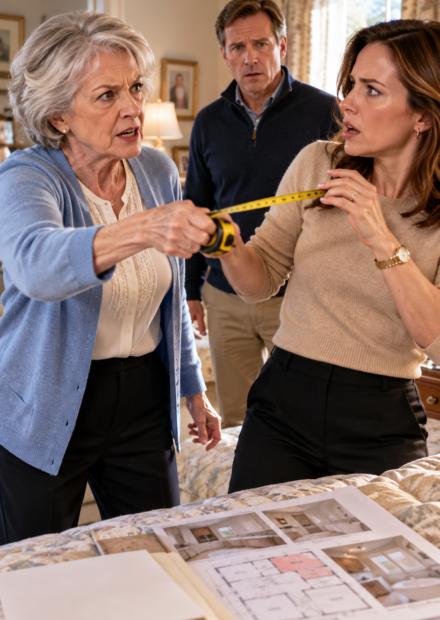
“You counted my bedrooms before telling me the truth.”
Tyler stepped between us.
“Enough.”
“No, Tyler.”
My voice surprised even me.
For seven years, I had imagined what I would say if I ever saw him again.
None of the speeches survived.
All that remained was truth.
“You don’t get to say ‘enough’ five minutes into a conversation you’ve avoided for seven years.”
His face changed.
“Mom—”
“You asked me for distance. I gave it to you.”
“I didn’t ask for seven years.”
“You never answered.”
“I was dealing with things.”
“For seven years?”
Natalie looked away.
Tyler whispered, “It got harder to call.”
“Why?”
“Because the longer it went, the more awkward it became.”
That answer was so painfully human that for a moment I didn’t know what to say.
Then he added:
“And every time I thought about calling, I knew you’d want explanations.”
I nodded slowly.
“So instead of giving me one, you waited until you needed a house.”
He flinched.
Good.
Not because I wanted to hurt him.
Because for seven years I had carried all the hurt alone.
He needed to feel at least the weight of the truth.
Natalie stood.
“We should go.”
Tyler looked at her.
“Where?”
That one word changed the room.
Natalie stared at him.
“What do you mean?”
Tyler rubbed his forehead.
“Nat…”
My stomach tightened.
“Do you have somewhere to stay?”
Neither answered.
“Tyler.”
He sank onto the sofa.
“Our house is already gone.”
“What?”
“The bank took it.”
Natalie closed her eyes.
“We were supposed to close a short sale,” Tyler said. “It fell through.”
“And your savings?”
Silence.
“How bad is it?”
“Bad.”
I looked at Natalie.
Her eyes were wet now.
For the first time that morning, she didn’t look polished.
She looked scared.
“We have enough for a hotel for maybe a week,” Tyler said.
I stared at my son.
This was different.
Not different enough to erase seven years.
But different enough that the mother in me screamed to fix it.
That was the dangerous thing about old habits.
They can feel exactly like love.
“Why didn’t you tell me before coming?”
“I was ashamed.”
“Yet you were willing to move into my house without telling me.”
“I thought once we were here…”
He stopped.
“What?”
“That we could work things out.”
I looked at him.
“No. You thought once you were here, I’d be too guilty to make you leave.”
His silence answered.
Natalie began crying.
Quietly.
I hated that it affected me.
I hated the instinct that made me want to bring her water and tell her everything would be okay.
There was a baby involved.
That mattered.
But so did I.
I walked to the kitchen.
When I returned, I handed Natalie a glass of water.
Then I looked at them both.
“You cannot live here.”
Tyler’s shoulders sagged.
“But I will pay for a hotel for two weeks.”
He looked up.
“Mom—”
“Two weeks. And I’ll help you find an apartment you can afford.”
Natalie wiped her eyes.
“We don’t have income.”
“Then Tyler needs work.”
His face reddened.
“I’m looking.”
“Good.”
“I’ve been looking.”
“Then keep looking.”
He stared at me.
“You own a company.”
And suddenly the next request arrived.
I almost admired the efficiency.
“Yes.”
“You could hire me.”
“I could.”
Hope flashed across his face.
I finished.
“But I’m not going to.”
His expression collapsed.
“Why not?”
“Because I don’t know who you are anymore.”
That silenced all three of us.
Then Tyler said something I would remember for a long time.
“Maybe you never did.”
—