Chapter 4 – THE PRICE OF ENTITLEMENT
I expected myself to scream.
I didn’t.
That frightened Claire more.
“How much?” I asked.
“Margaret—”
“How much did you sell Edward’s grandmother’s bracelet for?”
She looked at Samuel.
He offered no rescue.
“Forty-two thousand.”
Helen gasped.
I stared at Claire.
“When?”
“January.”
Nine months earlier.
I had spent nine months believing that bracelet was upstairs in my safe.
“Who bought it?”
“A dealer.”
“Name.”
“I don’t remember.”
Samuel said, “You remember.”
Claire’s shoulders collapsed.
“Martin Keller arranged it.”
Daniel stepped backward.
“The same broker?”
“Yes.”
“Jesus Christ.”
Claire reached for him.
He moved away.
That seemed to hurt her more than anything else.
“I was going to replace it.”
“With what?”
“I thought I could buy it back.”
“With money from where?”
“The Ashford closing.”
“The closing that didn’t happen?”
She began crying.
“Yes.”
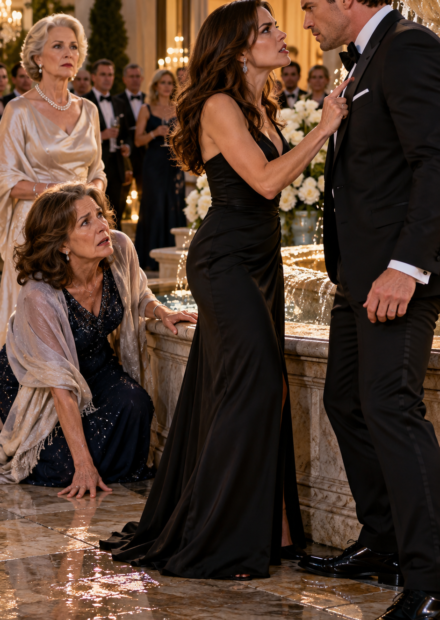
I walked downstairs.
I needed distance.
The others followed eventually, but I went directly into the kitchen.
For forty-one years, that kitchen had been where Edward and I solved things.
College tuition.
Daniel’s broken arm.
My mother’s funeral.
Edward’s first cancer diagnosis.
The day he was told treatment had stopped working.
He had sat at the same table where I now lowered myself into a chair.
Samuel entered quietly.
“What happens now?”
“That depends partly on what you want.”
“I want the bracelet back.”
“I understand.”
“Can we?”
“Possibly.”
He explained that because it was trust property and Claire had no authority to sell it, the transaction could potentially be challenged. But the circumstances of the buyer, documentation, and subsequent transfers mattered.
I barely heard the legal details.
One sentence mattered.
There was a chance.
Daniel came into the kitchen.
“Mom.”
I looked at him.
He sat across from me.
“I’ll pay for it.”
“No.”
“Yes.”
“No.”
“It’s my wife.”
“And your house is apparently already at risk.”
“I don’t care.”
“I do.”
His eyes filled.
“Why?”
“Because you’re my son.”
He looked down.
“That hasn’t stopped me from letting you down.”
“No.”
I reached across the table.
“But letting me down doesn’t make you disposable.”
His face crumpled.
For fourteen months, I had feared that setting boundaries would cost me my son.
Now I understood something Edward apparently learned before I did.
Boundaries weren’t what endangered love.
Entitlement was.
Daniel took my hand.
“I should have seen it.”
“So should I.”
“You were grieving.”
“So were you.”
He nodded.
That mattered.
Edward had not only been my husband.
He had been Daniel’s father.
Claire’s manipulation had worked because both of us were grieving and both of us had wanted to avoid another loss.
Later that afternoon, Samuel contacted Martin Keller.
The broker cooperated immediately once he understood the bracelet was trust property.
He had records.
Claire had represented herself as authorized to dispose of family assets.
She had provided photographs.
A description.
And something else.
An email.
Samuel read it aloud.
*My mother-in-law has begun distributing family pieces now that my father-in-law is deceased. Daniel and I have authority to handle items allocated to our branch of the family.*
Daniel closed his eyes.
“Allocated to our branch?”
Claire sat at the opposite end of the study.
“I thought that was effectively true.”
“It wasn’t true at all,” I said.
“I know that now.”
“No. You knew it then.”
She looked at me.
“You knew you hadn’t asked me.”
She had no answer.
Martin had sold the bracelet to a collector in Boston.
The good news was that the collector still owned it.
The bad news was that she had paid sixty-one thousand dollars after dealer fees and markup.
The bracelet could be recovered.
But not for forty-two thousand.
Claire had created a nineteen-thousand-dollar hole before legal expenses were even considered.
Daniel said he would cover it.
Again.
I refused.
Again.
Finally Samuel interrupted.
“The trust has a recovery mechanism.”
I looked at him.
“What does that mean?”
“The cost can be charged against future distributions otherwise payable to the responsible beneficiary household.”
Claire looked up.
“You mean Daniel.”
Samuel nodded.
Daniel answered before I could.
“Do it.”
Claire stared at him.
“Daniel.”
“Do it.”
“That’s your inheritance.”
“No.”
He looked at his wife.
“That’s exactly the problem. We keep calling things mine before they are.”
Silence.
I heard Edward’s voice in my head.
*Some things aren’t yours just because you’re holding them.*
The bracelet was recovered eleven days later.
When Samuel brought the velvet box to my house, I sat in Edward’s study and cried.
Not because of the money.
Because his grandmother Ruth had worn that bracelet the night Edward introduced me to his family.
I had been twenty-one and terrified.
Ruth noticed.
She took my hand and said, “Don’t let all these Whitmores scare you, sweetheart. Half of them owe me money.”
I laughed so hard champagne came out of my nose.
Edward fell in love with telling that story.
I opened the box.
The sapphires were exactly as I remembered.
Samuel sat opposite me.
“There’s another matter.”
Of course there was.
“What?”
“The stewardship review.”
I closed the box.
“What happens?”
“The trust committee has to determine whether Daniel remains the successor steward for Schedule C.”
“Who’s on the committee?”
“You, Helen, myself, and two independent trustees.”
“I’m voting for Daniel.”
Samuel sighed.
“Margaret.”
“He returned everything.”
“After the violation.”
“He didn’t know about the bracelet.”
“That matters. But so does what he knew about the other items.”
I looked away.
Daniel had known Claire left wearing my necklace.
He had objected.
But he had allowed her to leave.
He had accepted the watch and other items without confirming Edward’s intentions.
None of that made him evil.
But stewardship was not a prize for being a good person.
It was responsibility.
Edward had understood that.
“Does Daniel lose his inheritance?”
“No.”
“His home?”
“No.”
“His business?”
“No.”
“Then what does he lose?”
“Automatic control over the heritage collection after your death.”
I looked at the necklace.
“Who gets control?”
“That’s what the committee decides.”
I hated the idea.
It felt like rejecting my son.
Samuel seemed to read my face.
“Edward separated love from stewardship deliberately.”
I looked at him.
“He knew you would struggle with that.”
Of course he did.
My husband had known me better than anyone.
A week later, the committee met.
Daniel came voluntarily.
Claire did not.
She had moved into a hotel after Daniel told her he needed space.
I did not ask whether they were divorcing.
That was their marriage.
Their decision.
Not mine.
Daniel spoke for twenty minutes.
He did not blame Claire.
That surprised me.
He explained the financial pressure.
His failure to read documents carefully.
His assumption that Claire understood family property better than she did.
His decision to remain silent when she walked out wearing the necklace because he wanted to avoid humiliating his wife publicly.
Then he said something that made me cry.
“My father wrote that stewardship isn’t ownership. I understood the words. I didn’t understand the difference.”
Samuel asked him what had changed.
Daniel looked at me.
“I watched my wife take something off my mother’s body, and I treated it like a marital disagreement.”
His voice shook.
“It wasn’t.”
No one interrupted.
“I should have taken the necklace back before we left.”
Helen asked, “Even if Claire had been furious?”
“Yes.”
“Even if it damaged your marriage?”
Daniel looked down.
“Yes.”
Then he corrected himself.
“No.”
Everyone waited.
“If telling my wife she can’t take my mother’s property destroys my marriage, then the necklace didn’t destroy it.”
I closed my eyes.
Edward would have been proud of him.
The committee deliberated privately.
I argued for Daniel.
Samuel argued for an independent professional steward for at least five years after my death, with Daniel eligible for later review.
Helen agreed.
The independent trustees agreed.
I lost the vote four to one.
For the first time in my life, I was grateful to lose.
Daniel accepted the decision.
Claire did not.
Three days later, she came to my house alone.
I almost didn’t let her in.
Then I saw her face.
No makeup.
Hair pulled back.
She looked exhausted.
“Can we talk?”
I stepped aside.
We sat in the living room.
For several minutes, neither of us spoke.
Finally Claire said, “Daniel filed for separation.”
I felt sad.
Not victorious.
Sad.
“I’m sorry.”
She laughed bitterly.
“No, you’re not.”
“I’m sorry my son is hurting.”
That stopped her.
She looked toward the fireplace.
“I didn’t start out wanting your things.”
I waited.
“When Daniel and I first got married, I thought this family was incredible. All the history. The houses. The stories. Edward.”
Her eyes filled.
“He was kind to me.”
“Yes.”
“I know.”
She wiped her face.
“Then Daniel’s business started struggling. Everyone kept saying he’d be fine because he had family support.”
“Who said that?”
“Friends. People in business. My parents.”
“Edward never said that.”
“No.”
“Neither did I.”
“No.”
She looked at me.
“But I started believing it.”
There it was.
The simplest truth.
Not a master plan.
Not hatred.
Belief.
A poisonous belief repeated often enough that it became permission.
She began seeing our family’s history as a balance sheet.
My home as inventory.
My widowhood as transition.
My age as evidence that my turn was ending.
“I’m sorry,” she whispered.
I studied her.
I wanted to ask whether she was sorry she hurt me or sorry she got caught.
But I already knew the answer was probably both.
Human beings rarely come with clean motives.
“Why did you take it off my neck?”
She cried harder.
“Because I knew if I asked, you’d say no.”
That answer hurt more than any excuse could have.
Because it was honest.
“You humiliated me.”
“I know.”
“In front of thirty-two people.”
“I know.”
“You called me too old to wear something my husband loved seeing on me.”
She covered her face.
“I know.”
I waited.
Then she said, “I was jealous of you.”
That surprised me.
“Of me?”
“You were never afraid of money.”
I almost laughed.
“Claire, Edward and I spent the first six years of our marriage terrified of money.”
“But not now.”
“No. Because we spent forty-one years building a life.”
She looked at the floor.
“I wanted the part where everything was secure without respecting the forty-one years it took to get there.”
I said nothing.
Then she reached into her purse.
She placed an envelope on the coffee table.
Inside was a check.
Nineteen thousand dollars.
The difference required to recover the bracelet.
“I sold my car.”
I looked at her.
“You didn’t have to.”
“Yes.”
“Samuel already charged the amount against—”
“I know.”
“Then why?”
“Because Daniel shouldn’t pay for the bracelet.”
I pushed the check back.
“No.”
She looked confused.
“I won’t take this.”
“Why?”
“Because making yourself poorer won’t make me whole.”
Her eyes filled again.
“Then what do you want from me?”
Finally, I knew.
“The truth.”
She stared at me.
“All of it.”
Her face went pale.
And that was when I realized there was still something she hadn’t told us.
“Claire?”
She looked toward the window.
“What else did you do?”
Her silence answered first.
Then she whispered:
“I made a list.”
“What list?”
“Everything in the house I thought would eventually go to Daniel.”
My stomach tightened.
“Where is it?”
“On my laptop.”
“What did you do with it?”
She looked at me.
“I sent it to someone.”
“Who?”
Her answer made the room feel suddenly cold.
“My father.”
—