Chapter 1 – TELL HIM HE WAS DANCING
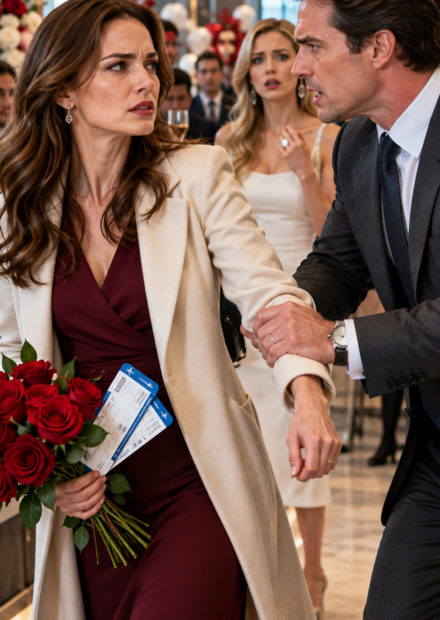
At 9:17 p.m., my husband put his hand on another woman’s waist in front of six hundred people.
At 9:44 p.m., he finally noticed I was gone.
Those twenty-seven minutes ended our marriage.
They also began the collapse of everything Mason Hartwell believed belonged to him.
I was thirty-five weeks pregnant with our twin daughters when the first camera flash exploded across the Grand Marlo ballroom.
I remember the exact second because one of my babies kicked beneath my ribs.
Hard.
My hand moved automatically beneath the enormous curve of my stomach.
“It’s all right,” I whispered.
I wasn’t sure whether I was speaking to them or myself.
Across the ballroom, my husband was dancing with Camille Rhodes.
And everybody knew what they were looking at.
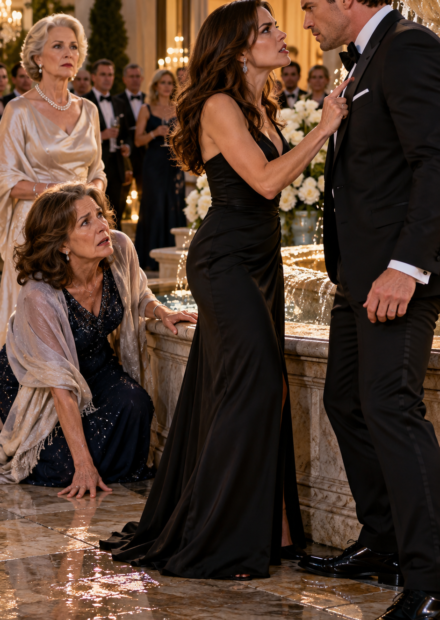
The Grand Marlo had been designed to make rich people feel immortal. Austrian crystal hung in glittering tiers from the ceiling. White Carrara marble reflected candlelight beneath six hundred pairs of designer shoes. Champagne flowed from silver fountains. Reporters stood behind velvet ropes photographing hedge-fund managers, celebrities, senators, philanthropists, and people wealthy enough to make introductions more valuable than checks.
It was supposed to be Mason’s greatest night.
Hartwell Global had crossed a two-billion-dollar valuation that week.
Eleven years earlier, Mason and I had celebrated our first profitable month by splitting a six-dollar carton of Chinese food on the floor of an apartment in Queens because we didn’t own a table.
Now there were ice sculptures bearing his initials.
M.H.
Not ours.
His.
That should have told me something.
Maybe it had.
Maybe I had simply spent too many years translating warning signs into excuses.
Mason looked magnificent beneath the chandeliers.
That was the terrible thing about him.
He always did.
His black tuxedo had been made for him in Milan. His dark hair was swept neatly away from his forehead. His shoulders were broad, his posture relaxed, and the smile on his face belonged to a man who had never once imagined losing something he considered his.
His right hand rested against Camille’s bare back.
Too low.
Too familiar.
Too certain.
Camille wore emerald silk.
I knew because I had seen the dress three days earlier when her assistant accidentally copied me on a wardrobe email.
At the time, I had stared at the photograph of the backless gown and told myself it meant nothing.
Camille was Hartwell Global’s director of communications.
She attended events.
She dressed beautifully.
Mason worked late.
Executives traveled.
People whispered because people were cruel.
I had become very talented at explaining my own humiliation to myself.
But there was nothing left to explain now.
Mason pulled her closer.
Camille laughed at something he whispered near her temple.
Then she placed one hand against his chest.
Not his shoulder.
His chest.
A camera flashed.
Then another.
Then twenty.
Behind me, somebody whispered, “Isn’t his wife standing right there?”
Another voice answered, “She’s eight months pregnant.”
“With twins.”
“Jesus.”
“Look at his hand.”
“That isn’t business.”
“No.”
A pause.
“That’s an announcement.”
I heard every word.
I also heard the orchestra.
Strauss.
Mason hated Strauss.
At least, the Mason I had married hated Strauss.
He used to call waltzes “music for people pretending their shoes don’t hurt.”
I almost laughed when I remembered it.
Instead, I watched him turn Camille beneath the chandeliers.
She came back into his arms smiling.
And Mason smiled down at her.
That smile hurt more than his hand on her body.
Because once, that smile had been mine.
Eleven years earlier, I had known a man with calloused fingers and twenty-eight dollars in his checking account.
We had lived above a laundromat.
In winter, the windows leaked cold air so badly that we stuffed towels along the frames.
Mason worked eighteen-hour days trying to build software nobody wanted to buy.
I worked my regular job, came home, made dinner, then stayed awake until two in the morning editing his proposals because he could build anything but couldn’t explain why anybody should pay for it.
One night the electricity was disconnected.
We sat in darkness with two candles between us.
Mason cried.
Not dramatically.
Quietly.
That made it worse.
“I’m failing you,” he whispered.
I took his face in my hands.
“No. You’re failing at something. Those are different things.”
He stared at me.
“You really believe that?”
“I believe in you.”
Three weeks later, he proposed.
The ring cost ninety dollars.
Silver wire.
Tiny stone.
His hands shook when he slipped it onto my finger.
“If I ever let this city turn me into somebody you don’t recognize,” he whispered against my neck, “you leave me to the wolves.”
I laughed then.
“Very romantic.”
“Promise.”
“Mason—”
“Promise me, Em.”
So I did.
I promised.
Now, eleven years later, I stood beneath chandeliers worth more than our first apartment building while the man from Queens danced publicly with his mistress.
And I finally understood.
Promises could survive poverty.
They could survive failure.
They could survive ambition.
They could even survive success.
What they could not survive was contempt.
My daughters moved again.
I lowered my head.
“It’s okay, my loves.”
My voice barely made a sound.
“It’s over now.”
The realization did not arrive like lightning.
There was no rage.
No dramatic shattering inside me.
Something simply stopped.
For months, maybe years, I had been standing inside our marriage holding up a ceiling Mason kept knocking holes through.
That night I finally stepped aside.
I looked at my wedding ring.
Platinum.
Three carats.
Flawless diamonds.
Mason had replaced my silver ring after his first million-dollar deal.
“You deserve something worthy of you,” he had said.
I had wanted to tell him the ninety-dollar ring had been worthy of me because the man who gave it to me had meant what it represented.
But Mason had looked so proud.
So I wore the diamonds.
My fingers were swollen from pregnancy.
Removing the ring hurt.
I twisted it once.
Twice.
The skin pulled against the metal.
I kept going.
Finally, it passed over my knuckle.
The ring sat in my palm.
Heavy.
Warm.
Dead.
I closed my fingers around it.
Then I turned away from my husband.
Victoria Hartwell stood beside one of the marble columns near the private entrance.
Mason’s mother was seventy-two and had spent most of her life being unimpressed by wealth.
She wore charcoal velvet and held a glass of water.
She wasn’t watching her son.
She was watching me.
The moment our eyes met, her face changed.
She knew.
Maybe mothers always know when their sons have become men they didn’t raise them to be.
I crossed the ballroom.
“Emily?”
Her voice shook.
“Sweetheart, you’re pale.”
I stopped in front of her.
“Let me call your driver.”
I took her hand.
“Emily?”
I turned her palm upward.
Then I opened my fingers.
My wedding ring dropped into her hand.
The tiny metallic sound disappeared beneath the orchestra.
Victoria stared down.
Her face drained white.
“No.”
I closed her fingers around the ring.
“Emily, what are you doing?”
“When he asks where I went,” I said, “tell him he was dancing.”
Her eyes filled instantly.
“No. No, wait. I’ll get him.”
She started toward the dance floor.
I caught her wrist.
“No.”
“Emily—”
“Don’t.”
“He needs to know what he’s doing.”
“He knows.”
“You’re thirty-five weeks pregnant.”
“I know.”
“With twins.”
“I know.”
“You cannot leave alone like this.”
That almost broke me.
Not because she was right.
Because she sounded like a mother.
And I had spent too many months feeling alone in rooms where I technically had a husband.
Victoria gripped my hand.
“Please.”
I looked over my shoulder.
Mason was still dancing.
Camille was laughing.
The cameras were still flashing.
Six hundred people had noticed my humiliation.
My husband had not noticed me.
“Sometimes staying only teaches them that you always will,” I whispered.
Victoria began crying.
“Emily…”
“Don’t interrupt his dance.”
I kissed her cheek.
Then I walked away.
People moved aside.
Some lowered their phones.
Some stared at the floor.
One woman I had known for seven years reached toward me, then seemed to think better of touching me.
I kept walking.
At the ballroom doors, I stopped.
My hand covered my stomach.
Behind me, the orchestra reached its final crescendo.
Applause erupted.
Thunderous.
Mason had finished his dance.
I pushed open the doors.
Cold October air struck my face.
For the first time that evening, I could breathe.
My driver was waiting beneath the awning.
“Mrs. Hartwell?”
“Take me home, Daniel.”
He opened the door immediately.
I climbed inside.
As Manhattan slid past the tinted windows, I expected myself to cry.
I didn’t.
That frightened me more than tears would have.
My phone vibrated.
Not Mason.
A gala organizer.
Then a board member’s wife.
Then someone from the foundation.
I turned the phone facedown.
When we reached the penthouse, the doorman smiled.
“Good evening, Mrs. Hartwell.”
“Good evening, Thomas.”
“You’re home early.”
“Yes.”
That was all.
I took the private elevator upstairs.
The doors opened into forty-two hundred square feet of silence.
Mason had called the penthouse our monument.
I had called it home because I had tried very hard to make it one.
I stood in the foyer.
There were photographs everywhere.
Mason ringing the opening bell.
Mason on magazine covers.
Mason beside presidents and athletes and billionaires.
And among them, photographs of us.
Our wedding.
Queens.
Our first office.
The day we signed our first major client.
Mason asleep on my shoulder on a subway at three in the morning.
I touched that photograph.
The man in it looked exhausted.
Hungry.
Happy.
Human.
I took my hand away.
Then I walked into our bedroom and pulled a suitcase from the closet.
I packed slowly.
Not jewelry.
Not gowns.
Not the things Mason had bought me.
I packed maternity clothes.
My medical folder.
Medication.
A pair of old slippers.
The tiny knitted hats Victoria had given me for the twins.
My laptop.
A battered notebook.
And from the back of my desk drawer, I took the one thing I had never allowed Mason to throw away.
The original silver engagement ring.
I held it under the bedroom light.
Ninety dollars.
Worthless.
Priceless.
I slipped it into my coat pocket.
My phone remained silent.
No call from my husband.
9:31.
Fourteen minutes.
I walked into the nursery.
Two white cribs stood beneath a painted ceiling of pale clouds.
Mason had hired a designer.
I had chosen the books.
Goodnight Moon.
The Velveteen Rabbit.
A collection of fairy tales my mother used to read to me.
I sat in the rocking chair.
One baby shifted.
Then the other.
“I’m sorry,” I whispered.
That was when I finally cried.
Not for Mason.
For the family I had kept pretending we still were.
My phone lit up.
9:39.
Still not Mason.
A text from Victoria.
**Where are you? Please tell me you’re safe.**
I typed:
**Home. Leaving now. Don’t worry.**
Three dots appeared.
Then disappeared.
I stood.
There was one more place I needed to go.
Mason’s home office.
For eleven years, Hartwell Global had occupied our marriage like a third person.
People thought Mason had built it.
That was the polished version.
The truth was less convenient.
Mason had built the product.
I had built the structure around the man who built the product.
In Queens, I wrote the first investor deck because Mason’s original presentation contained forty-seven slides of technical architecture and no explanation of why customers should care.
I named the company.
I negotiated our first lease.
I recruited our first operations manager.
I handled angry clients while Mason rewrote code.
I remembered birthdays, investors’ spouses, journalists’ deadlines, board sensitivities, employee crises, donor preferences, and every promise Mason made when he was too busy to remember making it.
When the company grew large enough for professionals to take over those jobs, I stepped back.
Not because I had stopped mattering.
Because Mason told me we had finally earned the luxury of having a marriage.
Then somehow the marriage became another job I performed for him.
I opened his office door.
The desk was immaculate.
A folder sat beside his computer.
The gala speech.
I had edited it that afternoon.
Mason’s closing line was highlighted.
**No empire is built by one person. Tonight I honor everyone who stood beside me before the world believed.**
I stared at it.
Then I laughed.
A terrible little sound.
My phone rang.
9:44 p.m.
MASON.
Twenty-seven minutes.
Exactly.
I watched his name pulse across the screen.
Once.
Twice.
Three times.
I declined the call.
It rang again immediately.
Decline.
Again.
Then a text.
**Where are you?**
Another.
**Emily?**
Another.
**What happened? Mom won’t tell me anything.**
I stared at the last message.
What happened?
Not *Are you safe?*
Not *I’m sorry.*
What happened?
As though he had arrived at the scene of an accident.
As though he had not been driving.
I typed four words.
**Ask the six hundred witnesses.**
Then I turned off my phone.
I left my keys on his desk.
Beside them, I placed my access card to Hartwell Global.
I looked around the office one last time.
Then I walked downstairs.
Daniel was waiting.
“Where to, Mrs. Hartwell?”
I gave him the address of the small apartment I had quietly kept after my mother died.
Mason hated that apartment.
He had wanted me to sell it.
I never did.
Perhaps some part of me had always known I might need one place in the world that did not belong to him.
As we pulled away, I looked up at the penthouse.
The lights burned across the top of the building like a crown.
By morning, Mason would discover it was empty.
But that night he still thought I had merely left a party.
He did not understand that I had left a marriage.
And he certainly did not understand that when I walked out of his ballroom, I had taken something far more valuable than a wedding ring.
I had taken the person who remembered how his entire life worked.
—