Chapter 3 – WHAT MY HUSBAND KNEW
By four that afternoon, I was sitting in a hotel room twelve miles from my own house.
That was my choice.
Arthur had offered to stay while things calmed down.
Daniel had begged me not to leave.
But I needed silence.
Not surrender.
Silence.
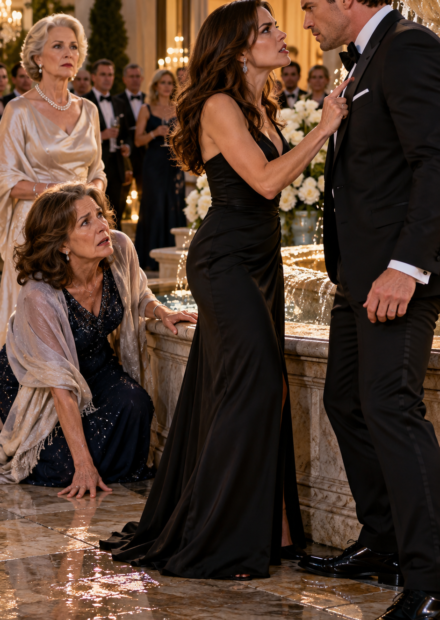
I took the wedding photograph, the recipe box, Harold’s cuff links, my mother’s Bible, June’s quilt, enough clothes for several days, and the red mixer.
I left the furniture.
I left the dishes.
I left every object whose ownership might become an argument.
I also left with my keys.
Brooke noticed.
She said nothing.
That mattered.
The hotel room smelled faintly of lemon cleaner.
I set Harold’s photograph on the desk.
Then I sat on the bed and cried.
Not elegantly.
Not the dignified tears of a wronged matriarch in a movie.
I cried until my nose ran.
I cried because Brooke had humiliated me.
Because Daniel had allowed it.
Because Harold was dead.
Because I wanted to call him.
That was the cruelest part of widowhood.
Not the funeral.
Not the empty side of the bed.
Not even the anniversaries.
It was the instinct.
Something happened and I still thought, I have to tell Harold.
Then, half a heartbeat later, the world corrected me.
No, you don’t.
You can’t.
I picked up his photograph.
“What did you see that I didn’t?”
Of course he didn’t answer.
But I remembered.
Six months before he died, Brooke and Daniel had visited us for dinner.
Brooke had been talking about a couple she knew whose parents had transferred a vacation home to their children early.
“It just makes sense for tax planning,” she said.
Harold had looked at her over his glasses.
“Sometimes.”
“Wouldn’t you rather see Daniel enjoy things while you’re alive?”
Daniel had nearly choked on his wine.
“Brooke.”
“What? I’m talking generally.”
Harold smiled.
“I enjoy watching Daniel enjoy things.”
She laughed.
“You know what I mean.”
“I do.”
Later, while I loaded the dishwasher, Harold dried a plate.
“She thinks the house goes to Daniel.”
I rolled my eyes.
“Eventually, probably.”
“Probably is a dangerous word.”
“She’s not plotting anything.”
“I didn’t say she was.”
“You’re doing that thing.”
“What thing?”
“The thing where you decide somebody’s character based on one dinner conversation.”
He handed me the plate.
“No. I’m deciding what paperwork should not depend on anybody’s character.”
At the time I thought he was being stubborn.
Now I understood.
Harold did not distrust Brooke specifically.
He distrusted assumptions.
Expectations.
Pressure.
He believed good people sometimes behaved badly when money became emotional.
He believed love worked better when boundaries were written clearly enough that nobody could pretend not to see them.
My phone rang.
Daniel.
I let it ring twice before answering.
“Mom?”
“Yes.”
“Where are you?”
“Somewhere quiet.”
“Are you okay?”
“No.”
Silence.
“Can I come see you?”
“Not tonight.”
“Please.”
I closed my eyes.
“What happened after I left?”
He exhaled.
“Brooke’s furious.”
“I assumed.”
“She says you planned this.”
“Planned what?”
“To humiliate her.”
I looked around the anonymous hotel room.
“I’m sitting alone beside an ice machine, Daniel. If this is my victory celebration, I planned it badly.”
He almost laughed.
Almost.
Then his voice broke.
“I’m sorry.”
I waited.
“I should have stopped her.”
“Yes.”
“I didn’t know she was going to do it like that.”
“Would another method have made it acceptable?”
“No.”
He answered immediately.
That mattered.
“I thought if you stayed with Aunt Ruth for a while—”
“Your Aunt Ruth lives in Arizona.”
“I know.”
“For how long?”
“I don’t know.”
“Until after the baby?”
“Maybe.”
“Until Brooke decided I could return?”
Silence.
I sat straighter.
“Daniel, did you believe I would leave permanently?”
“No.”
“Did Brooke?”
Another silence.
There was my answer.
“Mom—”
“Did she?”
“I don’t know.”
“Yes, you do.”
He sighed.
“She talked about converting your room into a second nursery and office.”
I laughed once.
It sounded ugly.
“Before or after telling me to leave?”
“Before.”
“How long before?”
“A couple weeks.”
I looked at Harold’s photograph.
A couple weeks.
The suitcases.
The questions about the deed.
The mortgage broker.
This had not been a pregnancy-fueled outburst.
The performance had been planned.
Maybe not every detail.
But the outcome.
Yes.
Brooke expected me to leave.
And Daniel had known enough to remain silent.
“You knew.”
“Not everything.”
“You knew enough.”
“I thought she would talk to you.”
“She did. She gave me a trash bag.”
He began crying.
I had heard my adult son cry only twice.
At Harold’s funeral.
And now.
“Mom, I messed up.”
I wanted to comfort him.
Every maternal instinct told me to say it was all right.
But it wasn’t.
So I said, “Yes.”
He went quiet.
Then he whispered, “I don’t know how I let it get this far.”
I did.
Not because he was weak.
Because surrender happened gradually.
The same way mine had.
A disagreement avoided.
A truth postponed.
An assumption left uncorrected.
One quiet compromise after another until cowardice looked like peace.
“Tell her the sixty days stand,” I said.
“She thinks you’ll change your mind.”
“I won’t.”
“Where are we supposed to go?”
“That is a question adults who want their own household usually answer.”
“Mom.”
“I love you.”
He began crying again.
“And I love that baby already.”
“Then—”
“But love is not a deed.”
Silence.
I had never spoken to him that way.
Neither had Harold.
Perhaps that had been part of the problem.
We had protected Daniel from enough consequences that he believed consequences were evidence love had disappeared.
“I’ll talk to you tomorrow.”
I ended the call.
At seven, my phone began vibrating repeatedly.
Messages.
First from my niece.
Then a neighbor.
Then two women from church.
Then someone I had not spoken to in six years.
Finally Arthur called.
“Have you seen the internet?”
“No.”
“Good.”
“That doesn’t sound good.”
“There’s a video.”
My stomach dropped.
“Chelsea?”
“Apparently a clip was shared.”
“Of what?”
“You packing.”
I opened the link Arthur sent.
There I was.
An old woman with a black trash bag.
Brooke’s voice could be heard.
Take whatever belongs to you.
Then the clip showed me removing the wedding photograph.
Brooke saying, That’s a start.
It ended before the mixer.
Before the recipe box.
Before the deed.
The caption read:
WHEN YOUR MOTHER-IN-LAW REFUSES TO ACCEPT THAT HER SON HAS HIS OWN FAMILY NOW.
My hands went cold.
Comments multiplied beneath it.
Some defended Brooke.
Some attacked her.
Most had no idea what they were watching.
That is the peculiar cruelty of public humiliation.
Strangers receive thirty seconds.
You lived thirty years.
Yet everybody believes the thirty seconds.
I called Arthur.
“Can we make them take it down?”
“We can request removal depending on where it’s posted, but copies are spreading.”
I closed my eyes.
“I don’t want a public war.”
“Then don’t have one.”
“What do I do?”
“Nothing tonight.”
Harold would have said the same thing.
Do not make permanent decisions during temporary adrenaline.
I turned off my phone.
For twenty minutes.
Then curiosity defeated wisdom.
When I turned it back on, another clip had appeared.
This one was longer.
Chelsea must have had a backup, or someone had screen-recorded what Brooke originally shared.
It included the mixer.
“That’s an appliance. It matches my kitchen.”
Then my voice.
“Not anymore.”
The comments changed.
People wanted context.
Then someone posted the recipe-box exchange.
Family recipes.
They were my family’s recipes.
I’m Daniel’s family now.
You married into a family. You did not erase the women who kept it alive.
That sentence spread faster than everything else.
By nine, Brooke’s own followers were asking questions.
Whose house was it?
Why was an elderly widow being given trash bags?
Why were friends drinking and recording?
Why did Daniel say nothing?
Then Chelsea did something I never expected.
She posted a statement.
Not dramatic.
Not cruel.
Just factual.
She said she had been invited that morning because Brooke told them she was finally “taking back her house.”
She admitted she recorded because Brooke wanted evidence in case I “made a scene.”
Then she wrote one sentence:
I did not know the house belonged to Eleanor.
Brooke called me at 9:17.
I stared at her name.
Then answered.
“What have you done?”
No greeting.
Her voice was shaking.
“I’m in a hotel room.”
“Chelsea is lying.”
“About what?”
“She’s making me look insane.”
“Did you invite her?”
“That isn’t the point.”
“Did you ask her to record?”
Silence.
“Brooke?”
“I wanted witnesses.”
“To what?”
“To you refusing to leave.”
“But I didn’t refuse.”
Another silence.
“No,” she said.
“I followed your instructions.”
“You knew.”
“Knew what?”
“You knew the house was yours and you let me make a fool of myself.”
For several seconds I could not speak.
Finally I said, “I asked whether you were certain.”
“That’s not the same as telling me.”
“You shouldn’t need to know someone owns a million-dollar house before deciding whether to humiliate her.”
Her breathing changed.
“I’m pregnant.”
“Yes.”
“I’m under unbelievable stress.”
“I believe you.”
“People are calling me a monster.”
“I’m sorry.”
“You’re sorry?”
“I am. Public humiliation is painful.”
She went silent.
She heard it.
I had meant it.
I did not want strangers attacking her.
Not because she deserved protection from consequences.
Because cruelty does not become moral when the correct person receives it.
“Take the video down,” I said.
“I didn’t post the public copy.”
“Then tell people to stop.”
“I can’t control them.”
“No. You can’t.”
Neither could I.
At ten-thirty, Arthur called again.
“There’s something else you need to know.”
I sat on the edge of the bed.
“What?”
“Daniel called me.”
My stomach tightened.
“Why?”
“He asked about Harold’s estate plan.”
I looked at the photograph.
“And?”
“I told him what I’m permitted to tell him.”
“Which is?”
“That Harold did not leave him an ownership interest in the house.”
“I already told them.”
“There’s more.”
I waited.
Arthur continued.
“Harold left a memorandum with me. Not legally dispositive by itself, but explanatory. He authorized me to share it with Daniel if there was ever a dispute about the house.”
I had forgotten.
Or perhaps Harold had never told me exactly what was in it.
“What does it say?”
Arthur paused.
“It explains why he never added Daniel to the deed.”
I stared at the carpet.
“I thought I knew why.”
“You know part.”
My heart began beating harder.
“What’s the rest?”
“I think you should hear it with Daniel.”
“Tonight?”
“He’s on his way to my office.”
I looked at the clock.
10:42.
“Arthur—”
“He specifically asked.”
I stood.
Something in his voice frightened me.
Not danger.
Finality.
As though Harold had been waiting eighteen months to speak.
I put on my coat.
Before leaving, I picked up the wedding photograph.
Then I changed my mind and set it down.
“No,” I whispered.
Harold had already planned for Tuesday.
It was time to hear what he had to say.
—